



B Vitamins and Vitamin C
Vitamins are small nutrients (micronutrients) that your body requires to grow, repair and function properly, Micronutrients and vitamins are only needed in small amounts, thus the general population should be able to meet recommended daily amounts (RDA) of all the vitamins (apart from Vitamin D) from a varied, balanced diet.
B Vitamins - what are they and why are they important?
There are 8 B vitamins in total: thiamin (B1), riboflavin (B2), niacin (B3), pantothenic acid (B5), pyridoxine (B6), biotin (B7), folate (B9) and cyanocobalamin (B12). Although they don’t directly provide energy, B vitamins act as a cofactor for energy metabolism and play a crucial role in cell regeneration, immune function, formation of red blood cells and nerve signaling (1). 28-days of supplementation with a complex of Vitamins B1, 2, 6 and 12 found improvements in aerobic exercise coupled with a reduction in fatigue markers (2), showing they could also have a performance benefit. Whilst it is easy for the average person to consume the recommended amount of B vitamins through diet alone, some research suggests that increased levels of exercise may increase B vitamin requirements (3) meaning athletes who engage in high levels of training may require B vitamin supplementation. This area is still significantly under researched, results are mixed and many papers are old, therefore it’s widely accepted that correcting any present B vitamin deficiency is enough to enhance performance, rather than consuming more than the RDA.
Dietary sources of B Vitamins
The main source of B vitamins is meat and fish, since they are found in living cells. This can pose a problem for vegans and vegetarians - especially for B12 which doesn’t have any significant plant-based sources. B2, 5 and 9 are found in nuts and green leafy veg, while B1 and 3 can be found in whole grains and legumes. Some foods like cereal and bread are fortified with B vitamins to increase intake in the general population. The take home message is to consume a varied, balanced diet to hit the RDA for B vitamins, and consider taking a B12 supplement if you follow a plant-based diet.
Vitamin C - what is it and why is it important?
Vitamin C is crucial in protecting cells, maintaining healthy tissues (including skin, hair and nails) and helping with wound healing (6). It also plays a vital role in immune health - 250-1000mg Vitamin C supplementation has been shown to decrease incidence of the common cold and upper respiratory tract infections by 50% in people who undertake large amounts of exercise (5). It has also been shown to reduce the duration of the common cold (5) which can be useful for professional athletes returning to training quicker from illness. Like B vitamins, it is thought that increased exercise can lead to increased vitamin C requirements, however research is still mixed and general advice is to avoid deficiency rather than to over-supplement.
Dietary sources of Vitamin C
The classic food that is thought of when vitamin C is mentioned is oranges. While citrus fruit is a main dietary source, other good sources include strawberries, bell peppers, broccoli, blackcurrants and brussels sprouts (6). Aiming to eat different colours of fruit and vegetables in each meal will help ensure you are consuming all the vitamins you require.
Why iidro?
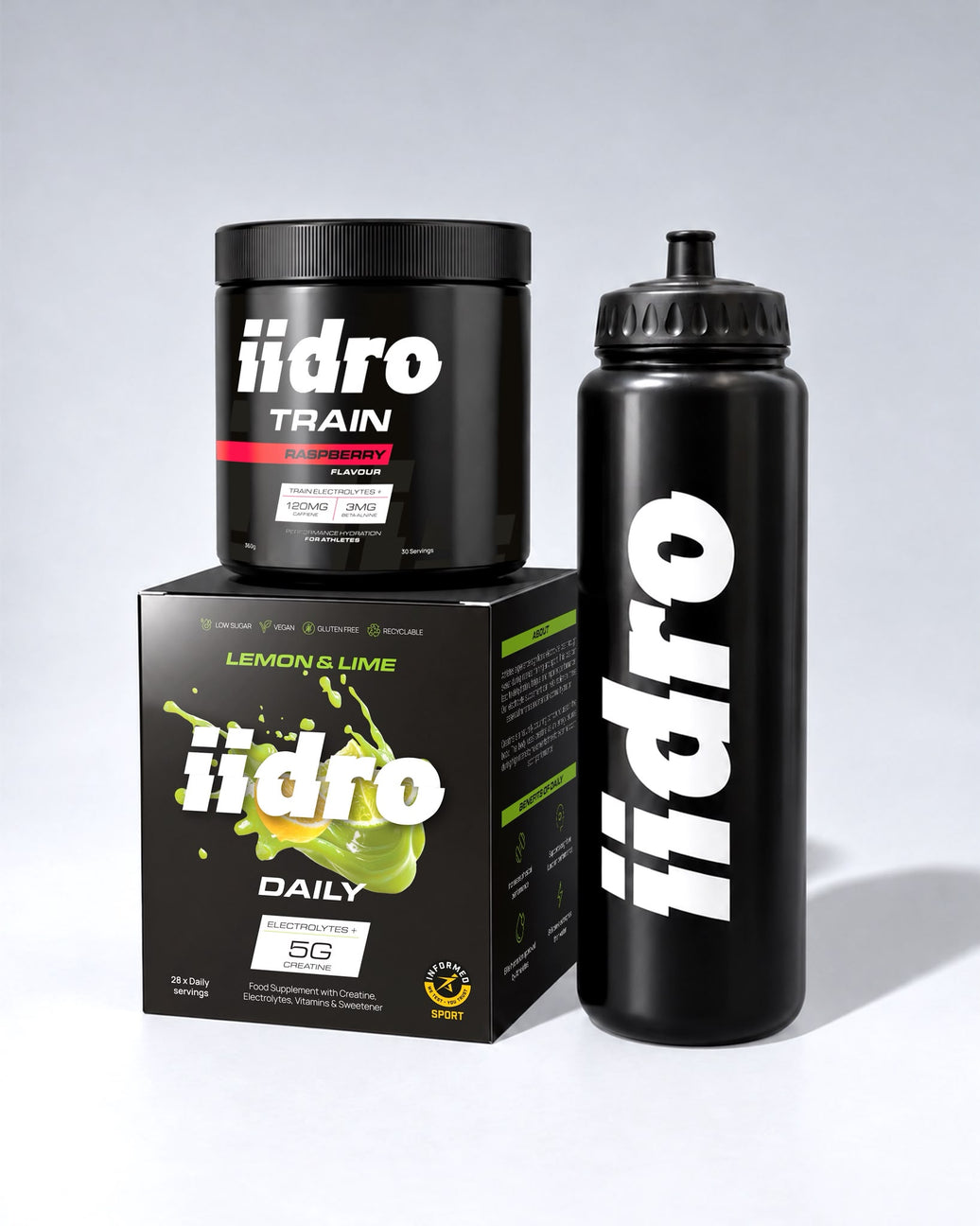
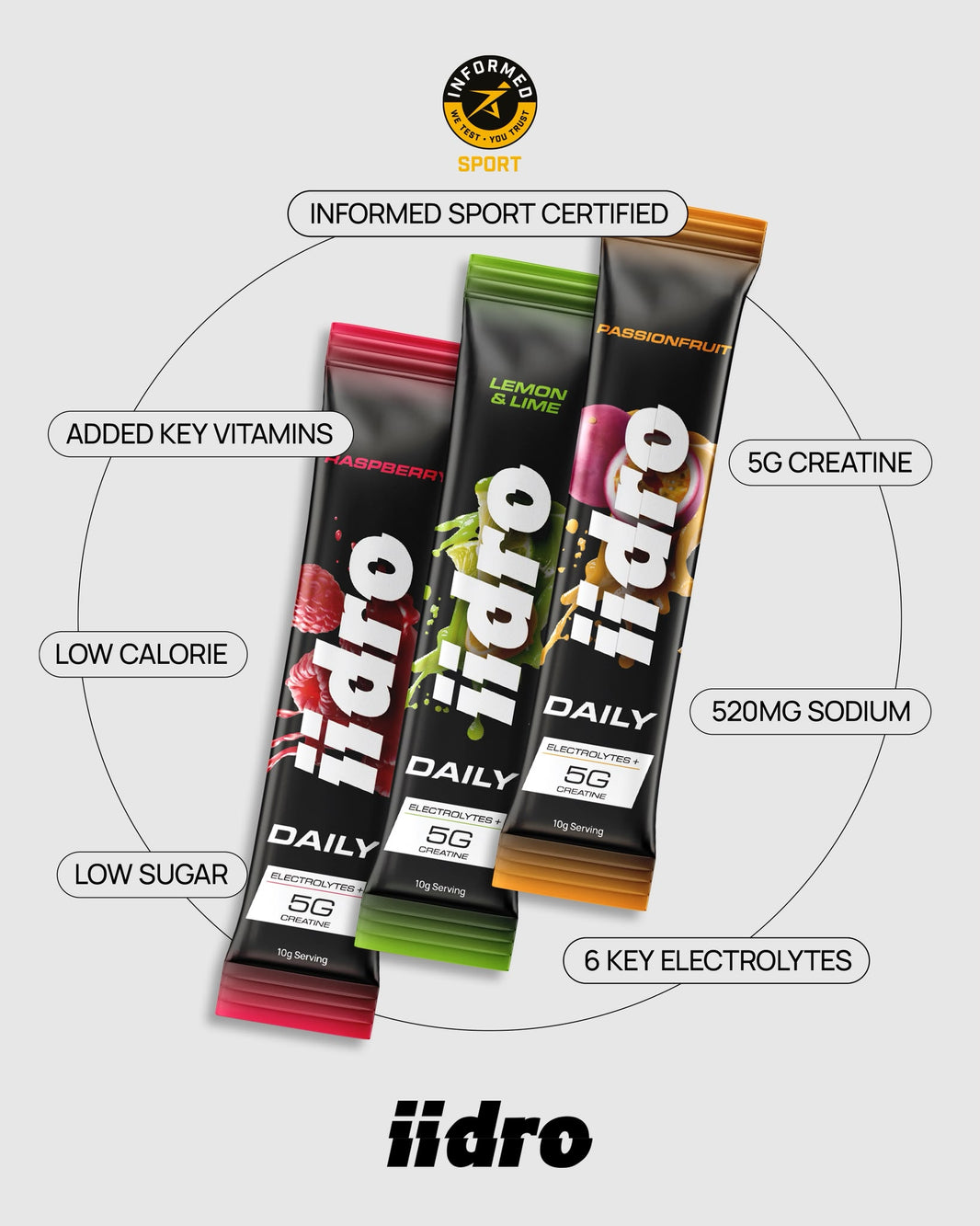
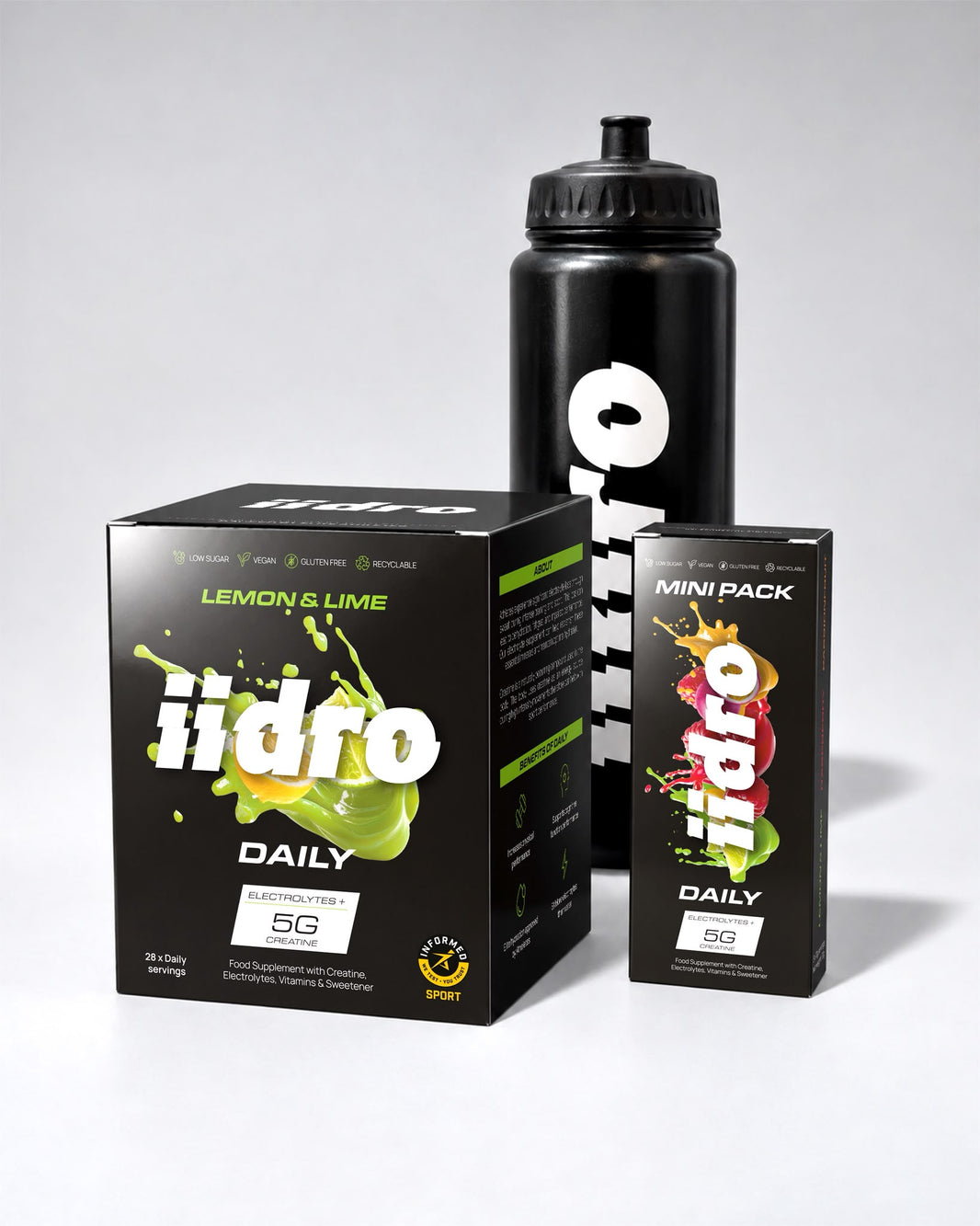
iidro drinks contain 100% of the RDA for all B vitamins and 250% of the RDA for Vitamin C, ensuring you are hydrated and nourished throughout the day.
References:
(1) https://www.nhs.uk/conditions/vitamins-and-minerals/vitamin-b/
(2) Lee, Mon-Chien et al. “A functional evaluation of anti-fatigue and exercise performance improvement following vitamin B complex supplementation in healthy humans, a randomized double-blind trial.” International journal of medical sciences vol. 20,10 1272-1281. 15 Aug. 2023, doi:10.7150/ijms.86738
(3) Woolf K, Manore MM. B-vitamins and exercise: does exercise alter requirements? Int J Sport Nutr Exerc Metab. 2006 Oct;16(5):453-84. doi: 10.1123/ijsnem.16.5.453. PMID: 17240780.
(4) Rogers DR, Lawlor DJ, Moeller JL. Vitamin C Supplementation and Athletic Performance: A Review. Curr Sports Med Rep. 2023 Jul 1;22(7):255-259. doi: 10.1249/JSR.0000000000001083. PMID: 37417662.
(5) Hemilä H, Chalker E. Vitamin C for preventing and treating the common cold. Cochrane Database of Systematic Reviews 2013, Issue 1. Art. No.: CD000980. DOI: 10.1002/14651858.CD000980.pub4
(6) https://www.nhs.uk/conditions/vitamins-and-minerals/vitamin-c/

Elite Club Hydration
For teams and clubs, optimizing performance and recovery is paramount. Recognizing the unique needs of athletic organizations, we offer a dedicated B2B partnership program designed to provide bulk discounts on our premium electrolyte products.
By partnering with us, you can ensure your team or club has consistent access to high-quality electrolytes for training, competition, and post-activity recovery, fostering enhanced performance and overall athlete well-being through convenient, large-scale supply.


